


Stellest Spectacle Lenses vs. Standard Glasses: What is the Long-Term Value for Your Child’s Vision?
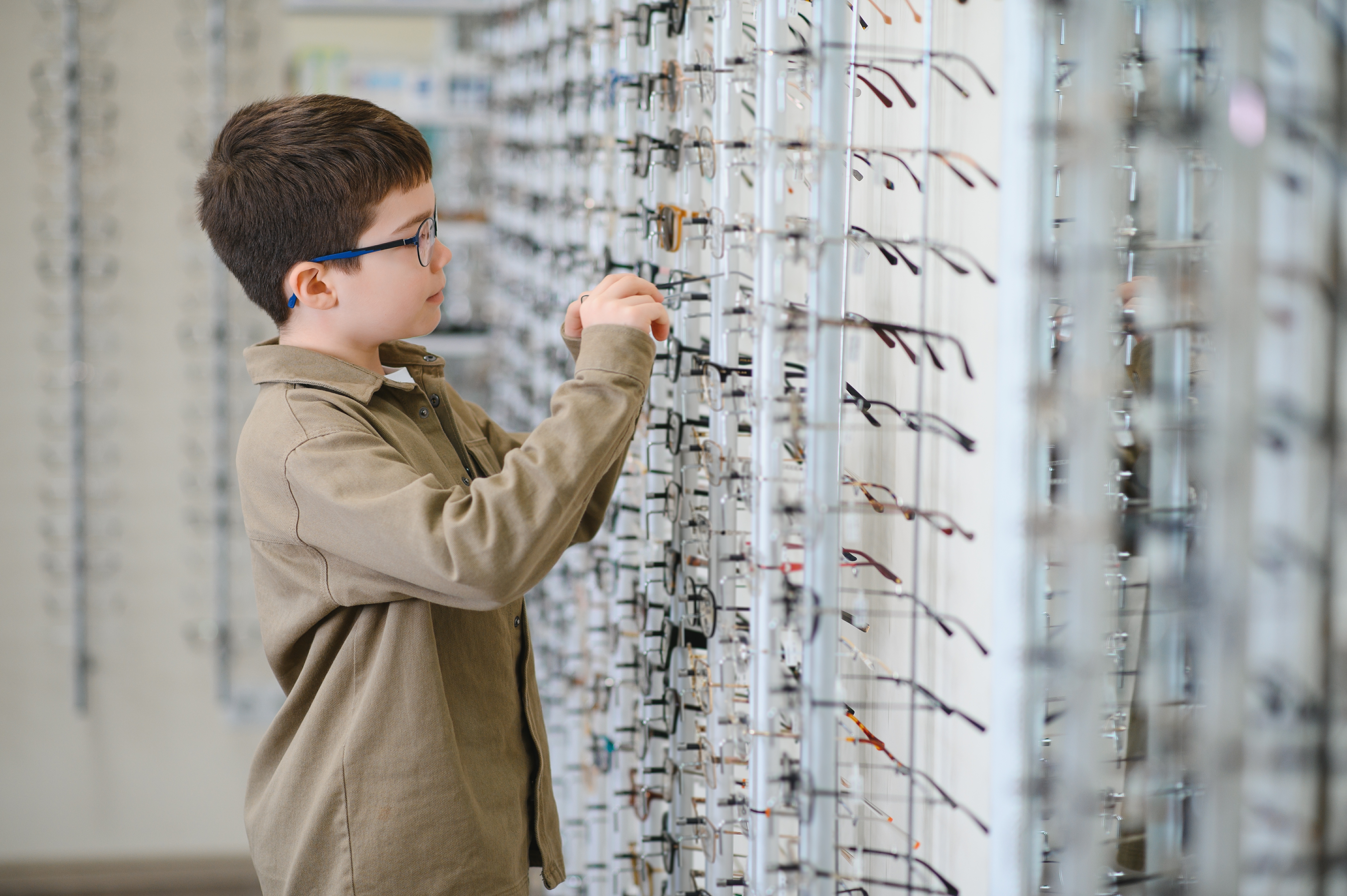
When a child is diagnosed with myopia, standard glasses can make distant objects clear again. However, they typically do not address the ongoing progression of nearsightedness. For Scottsdale families concerned about a child’s changing prescription, Stellest spectacle lenses offer a different approach by combining clear vision correction with technology designed to slow myopia progression.
At Salt River Eye Care, we help parents compare standard single-vision glasses with myopia management options based on their child’s prescription, age, eye growth, lifestyle, and long-term visual needs.
What Standard Glasses Can and Cannot Do
Standard single-vision glasses correct myopia by focusing light properly on the retina. They can help a child see the classroom board, recognize faces at a distance, participate in sports, and move through daily activities more confidently.
These glasses remain an effective way to correct blurred distance vision, but they are not designed to slow the eye growth associated with progressive myopia. A child may continue needing stronger prescriptions as the eyes grow. Regular eye exams are still important so changes can be identified and the prescription can be updated.
How Stellest Spectacle Lenses Are Different
Essilor Stellest lenses are prescription spectacle lenses created specifically for childhood myopia management. They have a clear central area that corrects distance vision, surrounded by specialized lenslets that provide a signal intended to slow excessive eye elongation. This design is known as H.A.L.T. technology, which stands for Highly Aspherical Lenslet Target.
The FDA has authorized Stellest lenses to correct myopia, with or without astigmatism, and slow its progression in children who are ages 6 through 12 when treatment begins. They look and function like everyday eyeglasses, which may make them a practical choice for children who are not ready for contact lenses.
Comparing the Long-Term Value
The value of Stellest spectacle lenses is not limited to how clearly a child sees today. Their purpose is to reduce the rate at which myopia worsens over time. Important differences include:
- Standard glasses correct blurry distance vision but do not actively manage myopia progression
- Stellest lenses provide vision correction while also helping slow prescription changes
- Both options require an accurate prescription, well-fitted frames, and routine eye exams
- Stellest treatment requires consistent daily wear and scheduled progress evaluations
- The right choice depends on the child’s age, prescription, progression rate, and ability to wear the glasses as directed
Stellest lenses may cost more initially than standard glasses because they include specialized myopia management technology. The long-term value comes from addressing progression rather than repeatedly correcting stronger prescriptions without attempting to slow the underlying change.
Why Slowing Myopia Progression Matters
Myopia often progresses during childhood as the eyes continue to grow. Higher levels of myopia are associated with greater risks of eye conditions later in life, including retinal detachment, glaucoma, cataracts, and myopic macular disease. No treatment can remove every future risk, but limiting the final degree of myopia may support healthier long-term outcomes.
For parents in Scottsdale, myopia management is best viewed as an ongoing care plan rather than a one-time purchase. Follow-up visits allow us to monitor prescription changes, evaluate eye growth when appropriate, check how the lenses are fitting, and determine whether the current approach remains effective.
Is Your Child a Candidate for Stellest Lenses?
Stellest lenses may be considered for children with diagnosed myopia, especially when the prescription is changing or there are risk factors for continued progression. A comprehensive myopia evaluation is necessary because not every child has the same needs.
We will review your child’s vision, eye health, prescription history, family history, and daily habits. We can then explain whether Stellest spectacle lenses, MiSight contact lenses, atropine eye drops, or another strategy may be suitable. The most valuable option is the one your child can use consistently and that can be monitored over time.
Schedule your child’s myopia management evaluation with Salt River Eye Care at 9015 E. Pima Center Parkway, Suite 1, Scottsdale, AZ 85258. Call (480) 278-7732 to learn whether Stellest spectacle lenses may be right for your child.

Contact Info
Hours of Operation
- Monday 9:00am - 6:00pm
- Tuesday 9:00am - 6:00pm
- Wednesday 10:00am - 6:00pm
- Thursday 9:00am - 6:00pm
- Friday 9:00am - 4:00pm
- Saturday Closed
- Sunday Closed
© 2026 Salt River Eye Care . All rights Reserved. Accessibility Statement - Privacy Policy - Sitemap
Powered by:
